← Back to All Blogs
Buying Guide · 6 min read · Updated Sep 9, 2026
7 Factors to Consider When Choosing an Inventory Management Software

TL;DR: The right inventory management software for an Indian SME manufacturer is not the one with the most features. It fits your budget over 2 to 3 years, scales past your current headcount, and gets adopted on the shop floor without months of training.
This guide breaks down the 7 factors that actually decide whether inventory software works for a manufacturing SME, cost, scalability, manufacturing fit, ease of adoption, integration, implementation support, and data security, plus where a manufacturing-first tool like TranZact fits versus a generic accounting-first system.
What Inventory Software Actually Needs to Do for a Manufacturer
Inventory management software is a system that tracks stock levels, movements, and reorder points across warehouses. For a manufacturer, that means linking raw material stock to work orders and finished goods, not just counting boxes in one location.
Most vendors sell on feature count. The better filter is fit: does the software match how your shop actually orders, stores, and consumes materials, without forcing you to change your process to match the software.
A trading business and a manufacturing SME need different things from inventory software. A trader just needs stock in and stock out. A manufacturer needs raw material consumption tied to production, batch tracking, and reorder alerts tied to actual usage, not guesswork.
The 7 Factors, Weighed Against the Risk of Getting Them Wrong
Quick Take Before the Full Breakdown
Cost adds up after the demo. Every quote should be read as a 3-year number, not a monthly one, per-user fees, setup charges, and paid add-ons often double the sticker price within a year.
Manufacturing fit beats feature count. BOM, work orders, and batch tracking matter more than a long features list built for traders.
Adoption decides ROI, not the contract. Software the shop floor avoids using never pays for itself, no matter how capable it is.
Integration saves double entry. Syncing with Tally and GST filing removes hours of manual reconciliation every week.
Support during setup matters most in month one. Vendors who help configure your first BOM and warehouse get you live faster and with fewer errors.
Feature
Why It Matters
Risk If Missing
Total cost of ownership
License fee plus setup, per-user, and add-on module costs at SME scale
Sticker price looks fine until year two, when add-ons double the real spend
Scalability as you grow
More machines, users, and warehouses should not force a new system every two years
You outgrow the tool right as it starts paying off, and migration resets the clock
Manufacturing-specific fit
BOM, work orders, and batch tracking matter more than generic ledger features
You pay for accounting modules you never use while shop-floor tracking stays in Excel
Ease of adoption on the shop floor
Operators and supervisors need to use it daily without weeks of training
Staff quietly go back to paper and WhatsApp because the software is too complex
Integration with what you already use
Tally, GST filing, and Excel exports should sync, not require double entry
Someone re-keys the same data into two systems every week
Implementation and onboarding support
Someone should set up your first BOM, warehouse, and users with you
You get a login and a PDF manual, and go live weeks later than planned
Data security and backup policy
Production and order data needs clear backup, access control, and uptime guarantees
A server crash or one departing employee wipes out months of production history
How to Prioritise These 7 Factors for Your Shop
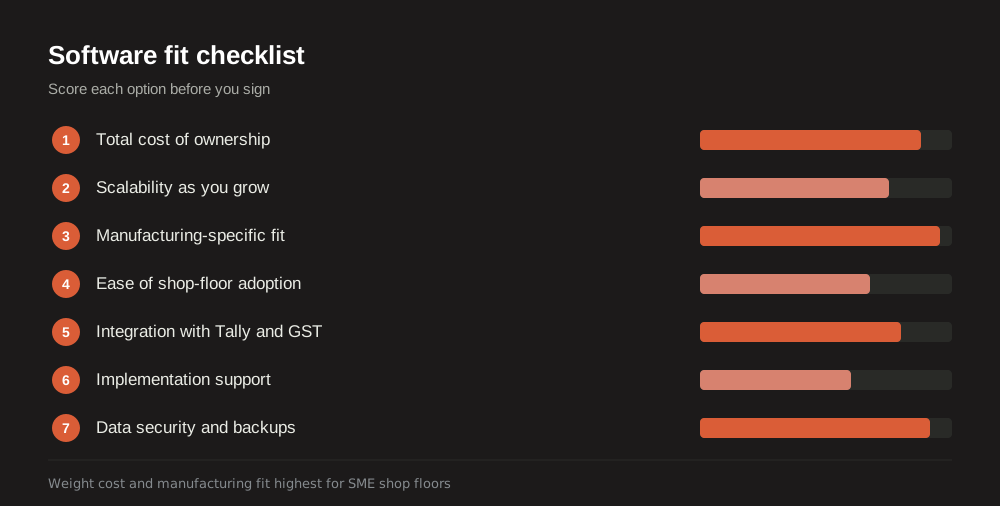
Not all 7 factors matter equally for every manufacturer. Weigh them based on four things about how your shop actually runs:
How many people need to use it daily. More shop-floor users make ease of adoption and training time matter more than any single feature.
How complex your BOM and materials are. Multiple raw materials per product make manufacturing-specific fit and batch tracking non-negotiable.
How tight your cash flow is. Thinner margins make total cost of ownership, not the sticker price, the factor that decides if this is affordable.
How much internal IT support you have. No in-house IT team makes implementation support and ease of use matter more than raw feature depth.
Where Inventory Software Choices Go Wrong
The wrong software fit shows up in predictable ways across Indian SME manufacturers:
Buying on feature count, not fit. A long feature list sold in a demo often includes modules built for trading or retail that a manufacturer never touches.
No manufacturing-specific tracking. Generic inventory software cannot tie raw material consumption to a work order, so true stock accuracy slips within weeks.
Underestimating total cost. Per-user pricing, paid integrations, and data migration fees are often left out of the first quote.
Skipping the adoption test. Software that looks fine in a demo gets abandoned on the shop floor within a month if it takes too long to log a transaction.
No plan for integration. Choosing software that cannot sync with Tally or GST filing means someone re-enters the same data twice, every week.
Still tracking raw material consumption in a spreadsheet that never matches the shop floor?
TranZact ties raw material stock to every work order, with warehouse-wise tracking and automatic reorder alerts, so your stock count matches what is actually on the shop floor.
See real-time stock tracking →
Where TranZact Fits for Inventory Management
TranZact tracks warehouse-wise stock with automatic reorder alerts and ties consumption to work orders and batch tracking, not just a stock ledger. If you are comparing dedicated inventory tools, see TranZact vs Zoho Inventory.
If you need multi-entity accounting or complex HR, TranZact is not built for that, and we would rather say so than have you find out three months into implementation. What it does well is the manufacturing and inventory side that generic accounting-first ERPs treat as an afterthought.
FAQ
What is inventory management software?
A system that tracks stock levels, movements, and reorder points, ideally linked to production so raw material consumption ties directly to work orders rather than sitting as a separate stock count.
What is the most important factor when choosing inventory software for a manufacturer?
Manufacturing-specific fit. Generic trading or accounting-first software can track stock quantities but cannot tie material consumption to a work order or a bill of materials, which is what actually drives inventory accuracy.
How much should inventory software cost for an SME manufacturer?
Total cost, not the license price, is what matters. Factor in per-user fees, setup or migration charges, and any paid integrations before comparing quotes, since these can double the effective cost within the first year.
Can inventory software replace Tally or Excel completely?
Not for accounting. The better pattern is inventory and production software that syncs one-way to Tally for accounting, while day-to-day stock and work order tracking happens in a manufacturing-first system.
How long does it take to implement inventory software?
For a manufacturing-first tool with dedicated onboarding support, a few weeks is typical. A full accounting ERP retrofitted for inventory can take months, largely due to configuration and data migration.
Related Reading
Check out other blogs

Production Mgmt Software
7 min read
Features and buying guide for production management software.
Read More

TranZact vs Marg ERP
5 min read
See how TranZact compares to Marg ERP for Indian manufacturers.
Read More

Production Planning Types
6 min read
The different types of production planning explained.
Read More

Born in India. Building for the world.
Built by IIT & IIM founders