← Back to All Blogs
Inventory Management · 8 min read · Updated Sep 8, 2026
B2B Inventory Management: 2025 Complete Guide for Indian SMEs

TL;DR: B2B inventory management is the system a manufacturer uses to track, control and fulfil bulk, credit-based stock movements between businesses. It covers real-time stock visibility, multi-location tracking, supplier and credit-term management, and demand-linked purchase planning, tightly coupled to production, not just a stock count.
This guide covers what B2B inventory management actually requires beyond a spreadsheet, the specific challenges bulk and credit-based orders create for Indian manufacturers, and how TranZact handles multi-location stock, reorder alerts and supplier tracking in one system.
What Is B2B Inventory Management?
B2B inventory management is the structured tracking, storage and fulfilment of physical goods bought, stored or consumed by one business from another, usually in bulk quantities and on credit terms.
Unlike B2C retail, B2B orders are large, negotiated, and often tied to 30 to 90 day payment cycles, which means stock accuracy and cash flow visibility have to work together, not separately.
For a manufacturer, this means raw material bought from suppliers on credit, work-in-progress stock consumed during production, and finished goods held or dispatched against bulk customer orders all need to reconcile against the same numbers.
Manual Spreadsheets vs Software-Driven B2B Inventory
Key Challenges in B2B Inventory Management
Higher volume orders. Bulk quantities mean more complex picking, storage and logistics than single-unit retail fulfilment.
Cash flow tied to inventory. 30 to 90 day credit cycles mean stock sitting unsold is also cash sitting uncollected.
Credit line tracking. Getting a customer or supplier credit term wrong delays either a purchase or a shipment.
Returns are costly. A B2B return often means reworking or re-certifying a batch, not just restocking a shelf.
Multi-location complexity. Manufacturers running more than one warehouse or store need stock numbers that agree across all of them, in real time.
What It Requires
Manual / Spreadsheet Approach
Software-Driven Approach
Stock visibility
Updated whenever someone remembers to update the sheet
Real-time, updated the moment stock moves
Multi-location tracking
Separate sheets per location, reconciled manually
One system, all locations visible together
Reorder timing
Someone notices stock is low, often too late
Automated alerts before stock runs out
Supplier performance
Tracked from memory or scattered emails
Lead time, accuracy and pricing tracked per vendor
Credit and payment terms
Manually cross-checked against invoices
Tied to purchase and sales records automatically
Batch and SKU control
Manual tagging, error-prone at scale
Batch and SKU-level tracking built in
How to Set Up B2B Inventory Management, Step by Step
A working B2B inventory system comes down to four things, and skipping the third is where stockouts and dead stock both quietly build up:
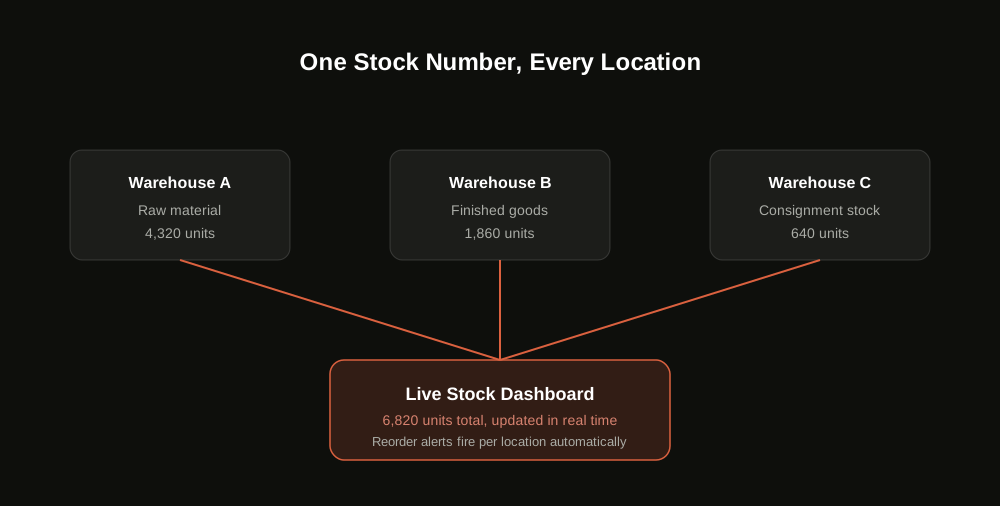
Get real-time stock visibility across every location. If two warehouses cannot see each other stock, you will overorder in one and run out in the other.
Set reorder points per SKU, not a blanket rule. A fast-moving raw material and a slow-moving spare part need very different reorder thresholds.
Track supplier performance on every purchase. Lead time, quality and pricing consistency should be visible per vendor, not just remembered by whoever placed the order.
Tie purchase planning to actual demand. Buying against a forecast that ignores current sales orders is how dead stock happens.
Where B2B Inventory Management Breaks Down in Practice
B2B inventory looks manageable at low volume. In practice these five issues show up as SMEs scale:
Stock counts disagree across sheets. Purchase, sales and warehouse teams each keep their own version, and nobody number matches at month end.
Reorders happen after the stockout, not before. Without automated alerts, low stock only gets noticed when a customer order cannot be fulfilled.
Vendor master data drifts. The same supplier gets entered under slightly different names, splitting purchase history across multiple untraceable records.
Credit terms and stock decisions live in different places. Purchasing keeps ordering from a supplier whose payment terms have quietly gotten worse.
Multi-location stock hides dead inventory. Slow-moving stock at one location goes unnoticed while another location reorders the same item.
Still reconciling stock across three different spreadsheets before you can promise a delivery date?
TranZact tracks stock in real time across every warehouse and store, with automatic reorder alerts before you run out, not after.
See real-time stock across all locations →
How TranZact Helps With B2B Inventory Management
TranZact gives multi-location, real-time visibility into stock in, issues and batch tracking, so purchase and sales teams work off the same numbers. Automated reorder alerts fire before stock runs out, not after a customer order gets stuck. Purchase planning ties directly into MRP-driven demand, so buying decisions reflect what is actually selling.
TranZact does not negotiate your credit terms with suppliers or customers, that is still a commercial decision your team makes. What it gives you is accurate, real-time stock and reorder data so that decision is based on what you actually have, not what a spreadsheet says you might have.
FAQs
What are the benefits of B2B inventory management software?
Improved accuracy, real-time visibility across locations, reduced manual reconciliation work, and fewer stockouts and overstocking situations.
How does B2B inventory management support order fulfilment?
By merging sales and stock data in one place, so a sales order can only be confirmed against stock that is actually available, not what a spreadsheet said last week.
Can B2B inventory software track supplier performance?
Yes. Lead times, order accuracy, pricing and delivery consistency can all be tracked per vendor and used to inform future purchase decisions.
What is the difference between B2B and B2C inventory management?
B2B inventory deals with larger order volumes, negotiated credit terms and longer replenishment cycles. B2C deals with smaller, more frequent orders and immediate payment, which makes the two systems priorities different even when the underlying stock is the same.
Do small manufacturers really need dedicated B2B inventory software?
Once stock is spread across more than one location, or credit terms depend on accurate stock and payment history, spreadsheets stop scaling. That is usually the point where dedicated software pays for itself.
Related Reading
Check out other blogs

Consignment Inventory: How It Works, Pros, Cons, and When to Use It
8 min read
How consignment inventory differs from owned inventory, who bears the risk, and how to track consigned stock accurately without losing visibility.
Read More

Stock Discrepancy: Causes and How to Fix It
9 min read
What causes stock discrepancies in Indian manufacturing, how to catch them fast, and how to stop physical and system stock from drifting apart.
Read More

Inventory Write-Down vs Write-Off: What is the Difference
7 min read
How inventory write-downs work, how they differ from a write-off, and how to reduce the losses that force one in the first place.
Read More

Born in India. Building for the world.
Built by IIT & IIM founders