Cost of revenue is the total direct cost of producing and delivering what a manufacturer sold in a period: production cost (material, labor, overhead) plus outbound freight, packaging, and sale-linked commissions. It sits between COGS, which stops at production, and operating expenses, which cover costs not tied to any specific sale.
This guide covers what counts as cost of revenue for a manufacturer, how it differs from COGS and operating expenses, and why getting the split right changes what your gross margin actually tells you.
What Is Cost of Revenue?
Cost of revenue is the total cost directly attributable to producing and delivering the goods or services a business actually sold in a given period.
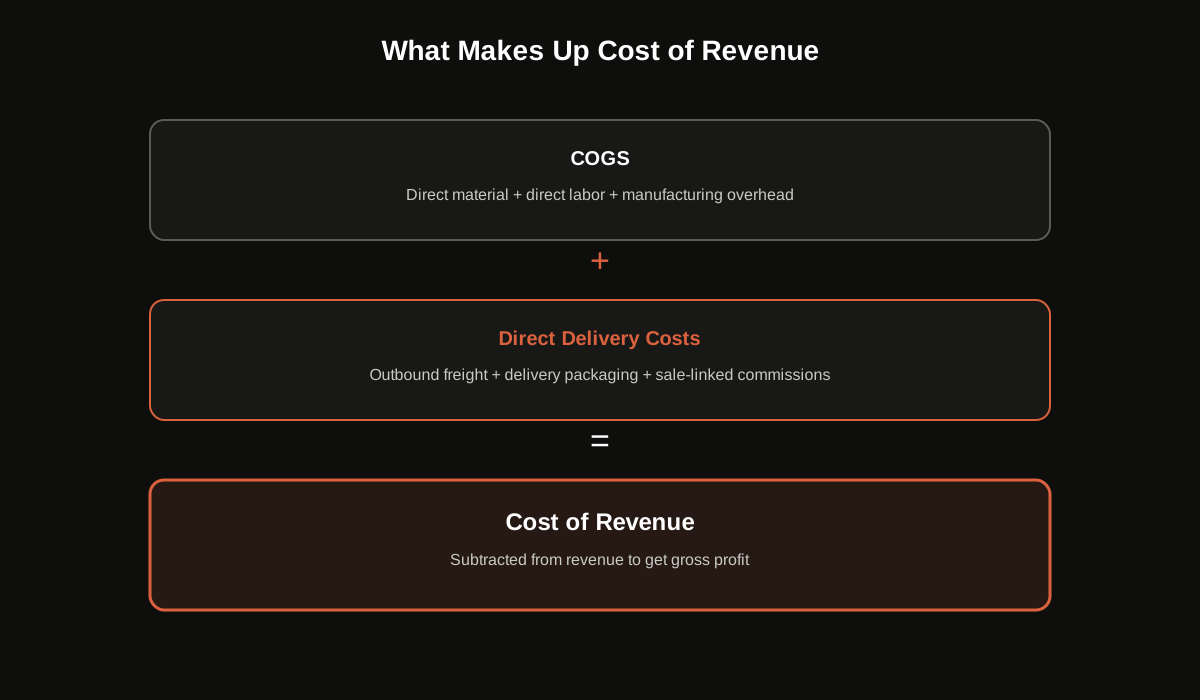
For a manufacturer, that typically means the cost of goods sold, direct material, direct labor and manufacturing overhead, plus the direct cost of getting the finished product to the customer, freight out, outbound packaging, and any commission tied specifically to that sale.
It stops short of general operating expenses. Marketing spend, admin salaries and R&D that are not tied to producing or delivering a specific order sit below cost of revenue on the income statement, not inside it.
Cost of Revenue vs COGS vs Operating Expenses
Scope: COGS covers only production; cost of revenue adds direct delivery costs; operating expenses cover everything else not tied to a specific sale.
Includes: COGS is material, labor and manufacturing overhead; cost of revenue adds outbound freight and sale-linked costs; operating expenses are admin, marketing and R&D.
Tied to a specific sale: COGS and cost of revenue both scale with units sold; operating expenses generally do not move with any single order.
Where it sits on the income statement: cost of revenue is subtracted from revenue to get gross profit; operating expenses are subtracted further down to get operating profit.
Manufacturer relevance: mixing outbound freight into operating expenses instead of cost of revenue overstates gross margin and understates what a sale actually cost to fulfill.
How Cost of Revenue Is Calculated
Calculating Cost of Revenue
Working out cost of revenue for a period comes down to four components:
Cost of goods sold (COGS). Direct material, direct labor and manufacturing overhead for the units actually sold in the period, the base most manufacturers already track.
Outbound freight and shipping. The cost of getting finished goods from the factory to the customer, which many manufacturers bury in overhead instead of tying to cost of revenue.
Delivery-linked packaging. Packaging specific to shipment and dispatch, as opposed to production packaging already counted in COGS.
Direct sale-linked costs. Commissions or fees paid specifically because a sale happened, not general sales team salaries that apply regardless of order volume.
Common Cost of Revenue Mistakes
The same errors show up when manufacturers calculate this:
Treating cost of revenue as identical to COGS. Skipping outbound freight and delivery-linked costs understates true cost of revenue and inflates gross margin on paper.
Including general overhead that is not sale-specific. Factory rent or admin salaries that do not change with sales volume belong in operating expenses, not cost of revenue.
Not separating inbound and outbound freight. Freight to bring raw material in is part of COGS; freight to ship finished goods out is part of cost of revenue, mixing the two distorts both numbers.
Using estimated instead of actual production cost. A standard BOM cost instead of actual material and labor consumed hides scrap and rework losses inside the cost of revenue figure.
Never revisiting the number as freight or vendor rates change. A cost of revenue calculated once and reused for months quietly goes stale as shipping and input costs move.
Do you know your real cost of revenue per order, or just what the standard cost card says it should be?
TranZact tracks actual production cost against each work order, using real material consumption and labor, not a standard estimate, so your cost of revenue reflects what an order actually cost.
See Your Real Cost of Revenue →
How TranZact Helps Track Cost of Revenue
TranZact’s production costing captures actual material and labor cost against each work order, using your real multi-level BOM, so the production half of cost of revenue reflects what was really used, not a standard cost card.
It does not track outbound freight or delivery commissions, those still need to come from your logistics and sales records. What it fixes is making sure the production cost half of the number is accurate before you add the rest.
FAQs
What is cost of revenue?
Cost of revenue is the total direct cost of producing and delivering what a business sold in a period, production cost plus the direct cost of getting it to the customer.
What is the difference between cost of revenue and COGS?
COGS covers only production cost, material, labor and manufacturing overhead. Cost of revenue is broader, it also includes direct delivery costs like outbound freight and sale-linked commissions.
Is cost of revenue the same as operating expenses?
No. Cost of revenue is subtracted from revenue to get gross profit and only includes costs tied to a specific sale. Operating expenses are broader indirect costs, like admin and marketing, that do not scale with any single order.
How do you calculate cost of revenue for a manufacturer?
Add COGS for units sold to outbound freight, delivery-linked packaging, and any direct sale-linked commissions for that period.
Why does cost of revenue matter for gross margin?
Gross margin is revenue minus cost of revenue. Understating cost of revenue by leaving out delivery costs makes gross margin look better than it actually is.
Related Reading
Check out other blogs



Born in India. Building for the world.
Built by IIT & IIM founders