← Back to All Blogs
Inventory Management · 6 min read · Updated Sep 8, 2026
Inventory Write-Down vs Write-Off: What's the Difference

An inventory write-down is an accounting adjustment that reduces the recorded value of stock when its market value falls below cost, but is not zero, from damage, obsolescence, or falling demand. A write-off goes a step further and removes the item’s value entirely because it is worthless. Getting the distinction right changes how much hits your profit and loss statement, and when.
This guide covers when to write down versus write off, the accounting treatment for each, and how TranZact’s real-time stock visibility catches slow-moving inventory before it needs either.
What Is an Inventory Write-Down?
An inventory write-down lowers the book value of stock to match its current market value when that value has genuinely fallen, due to damage, obsolescence, expiry, or a drop in demand, but the item still has some resale or use value left.
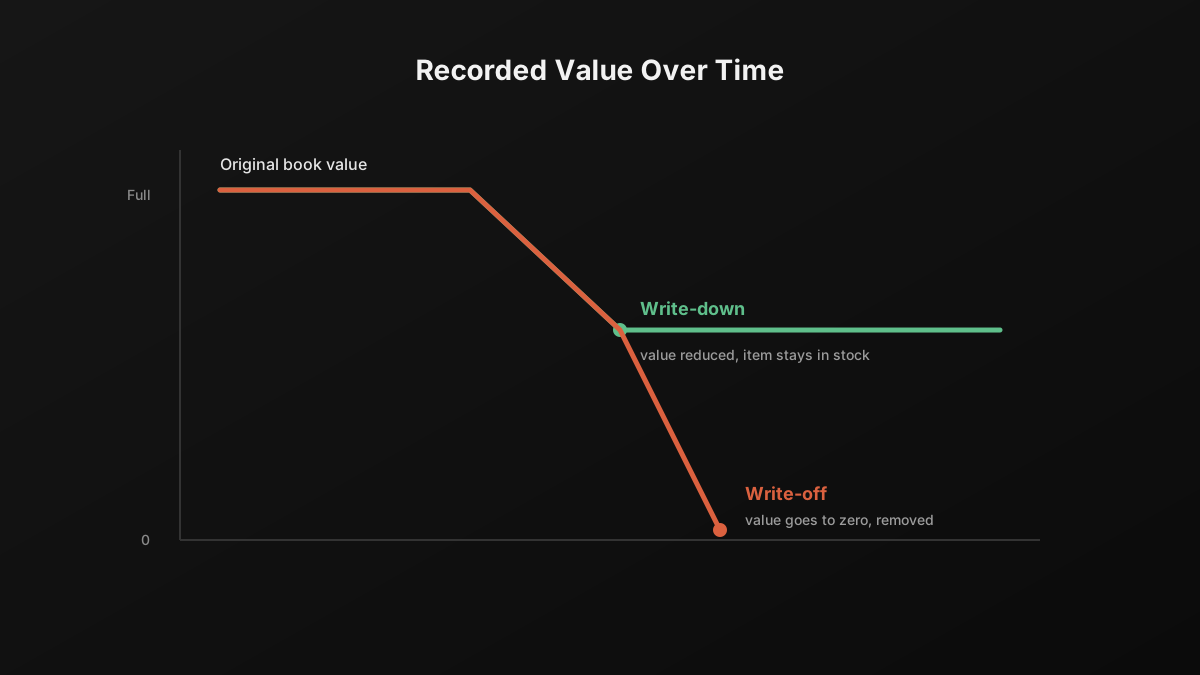
A write-down is a partial correction. The item stays on the books at a lower value. A write-off is a full correction: the item’s value is reduced to zero and removed from inventory entirely because it cannot be sold or used at any price.
Both reduce reported profit for the period. The difference is scale and finality, a write-down assumes some recoverable value remains, a write-off assumes none does.
Write-Down vs Write-Off
A write-down is partial: the item keeps some recorded value and stays in inventory.
A write-off is total: the item’s value drops to zero and it leaves inventory entirely.
A write-down usually comes from falling demand or minor damage, not total loss.
A write-off usually comes from expiry, destruction, confirmed theft, or obsolescence with zero resale value.
Both reduce profit in the period they are recorded, a write-off just takes the full hit at once.
See the Full Comparison Below
Aspect
Write-Down
Write-Off
What triggers it
Market value falls below cost but is not zero
Item is worthless: damaged beyond use, expired, or lost
Value after the adjustment
Reduced, but still greater than zero
Reduced to zero
Item status
Remains in inventory at the lower value
Removed from inventory entirely
Accounting entry
Debit write-down expense or COGS, credit inventory
Debit loss on write-off, credit inventory for the full amount
Reversal possible
Yes, if market value recovers before sale, under some standards
No, once written off the loss is final
Typical cause
Slow-moving stock, minor damage, seasonal demand drop
Expiry, destruction, confirmed theft, total obsolescence
How to Record an Inventory Write-Down, Step by Step
The process follows the same four steps whether the trigger is a slow-moving SKU or physical damage:
Confirm the item is not a write-off. If it has zero resale or use value, it should be written off, not written down, writing down a worthless item understates the loss.
Determine the new market value. Compare current selling price, scrap value, or replacement cost against the recorded book value to find the actual gap.
Record the adjustment. Reduce inventory value by the difference and recognise it as an expense, through cost of goods sold for small amounts or a separate write-down expense line for larger ones.
Document the reason and the evidence. A dated note on why the value fell, ageing report, damage report, demand data, is what makes the entry defensible at audit.
Where Write-Down and Write-Off Get Misused in Practice
The distinction is simple in theory. In practice these five mistakes show up often:
Writing down instead of writing off. Keeping a genuinely worthless item on the books at a token value overstates inventory and delays recognising the real loss.
Writing off too early. Slow-moving stock that could still sell at a discount gets written off completely, losing recoverable value that a write-down would have captured.
No consistent valuation method. Using a different basis, cost, market price, scrap value, for similar items makes write-downs inconsistent and hard to defend at audit.
Waiting for year-end to record either. Delaying the adjustment until the annual count means months of inaccurate inventory value feeding into every interim decision.
No trigger for review until stock is already worthless. Without ageing or slow-mover reports, write-down candidates only surface once they have become write-off candidates.
Still discovering dead stock only at your annual physical count?
TranZact tracks stock ageing and movement in real time, so slow-moving inventory shows up while it still has resale value, before it becomes a total write-off.
See your slow-moving stock before it’s worthless →
How TranZact Helps With Inventory Write-Downs
TranZact tracks stock ageing and valuation history for every item, so slow-moving stock is visible while it still has some resale value, not just at the annual count. It keeps a timestamped record of every adjustment, which is what makes a write-down or write-off defensible at audit. If your numbers are already off and need reconciling first, our stock reconciliation guide covers that process.
TranZact does not decide your write-down valuation method or post the accounting entry for you, that judgment and the journal entry still sit with your accountant. What it gives you is the ageing and movement data that tells you when a write-down decision needs to be made.
FAQs
What is the difference between a write-down and a write-off?
A write-down reduces an item’s recorded value because it is worth less than before, but still has some value. A write-off reduces the value to zero and removes the item from inventory because it has none left.
How do you record a write-down in accounting?
Reduce the inventory account by the difference between book value and current market value, and recognise that difference as an expense, through cost of goods sold for small amounts or a separate write-down line for larger ones.
Can a write-down be reversed if the item’s value recovers?
Under some accounting standards, yes, up to the original cost. Once an item is fully written off, however, the loss is generally final.
What triggers an inventory write-off instead of a write-down?
Total loss of value: expiry, destruction, confirmed theft, or obsolescence with zero resale or scrap value. If any value remains, it should be a write-down, not a write-off.
How can I reduce how often I need to write down inventory?
Better demand forecasting, smaller order quantities on slow-moving SKUs, and real-time ageing visibility so slow stock gets flagged and discounted before it loses all its value.
Related Reading
Check out other blogs



Born in India. Building for the world.
Built by IIT & IIM founders