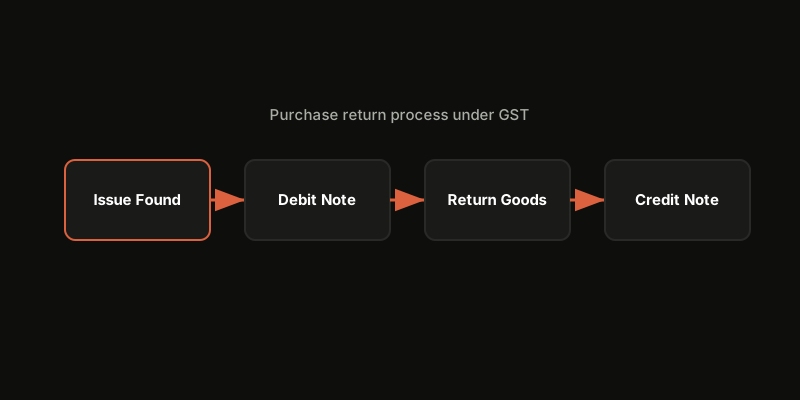
What Is a Purchase Return?

4 min read

Hero Background

A streamlined purchase return system is very important for SMEs. While it may seem like a regular activity, there's a lot more to it. In scenarios when damaged products are sold to a customer and when purchased products are frequently returned, it can add to your [inventory costs].

That can be frustrating, especially without a proper system to manage it. Moreover, your customers are more likely to buy from you again, if you create a positive experience for them, supported by a clear and organized purchase returns system.

Let's understand more about purchase returns, the process to record them and their advantages for your overall business and [accounting] purposes.

What Is a Purchase Return?

A purchase return is a business event that occurs when buyers or customers return a purchased product to the company. This can happen due to a variety of reasons, including:

  1. Defective or incorrect products delivered

  2. Wrong product specifications

  3. Late delivery

  4. Excess (or insufficient) quantity

Typically, every SME uses a [periodic inventory system] to record purchase returns. When purchase returns increase in volume, companies can rely on this inventory system to view the number and value of the returned products.

Let's consider an example in the next section to understand this concept better.

Example of Purchase Return

For understanding, let's assume the case of a small business purchasing a computer at the cost of ₹10,000, with a payment term of 30 days. The business would record this purchase in its periodic inventory system under the following headings:

  1. Purchase - debited by ₹10,000.

  2. Accounts Payable - credited for ₹10,000.

However, following the purchase, the buying company found that one of the computer parts was delivered with incorrect specifications, and that's why it wants to return that part. Let's assume that the cost of this part was incurred at ₹2000. In this case, the purchase return would be recorded in the inventory system as follows:

  1. Purchase Returns - credited by ₹2,000.

  2. Accounts Payable - debited by ₹2,000.

This means the business has a debit of ₹10,000 in its purchase account and a credit of ₹2,000 in its purchase return account. Effectively, the company has a net purchase valued at ₹8,000.

How to Make a Purchase Return Journal Entry

A purchase return journal entry is an entry made in the accounting books to register a purchase return. This journal entry is used to record all the goods that were returned to the supplier.

How do you make a journal entry for a purchase return? Any business can make this entry under the two following headings:

Debiting cash or the accounts payable

Crediting purchase returns and allowances (if any)

Here is an example of how a company can make a purchase return journal entry when dealing with four suppliers:

Each of these transactions is recorded in both the purchase and the purchase return journals. Here are how the entries are made in the purchase journal:

Here are how the entries are made in the purchase return entry journal:

Advantages of Purchase Return Journal Entry

A purchase return journal entry offers multiple benefits to small companies. Here are some of the major benefits:

Reduces the inventory balance

By entering purchase returns in this journal, small businesses can reduce their [inventory] balance and determine the exact number of items.

Prevents accounting mistakes

Automated purchase return entries in journals can simplify the accounting process and prevent incorrect entries.

Records the details of the customer purchase

Today, customers can purchase products through cash, bank transfers, credit, and a host of other payment methods. A purchase return journal records the details of the purchase made through any of the modes.

For example, an apparel company can buy cloth material on credit and pay in installments. In another instance, the same customer may return the item by debiting it from the accounts payable.

Determine the revenue earned from each customer

Whether B2B or B2C, payment return journals record every purchase transaction for every customer. Small businesses can use this data to calculate the exact revenue earned from the customer. This can help in determining sales discounts and offers for each customer.

A purchase return journal entry does have certain limitations. Let's discuss them next.

Disadvantages of Purchase Return Journal Entry

Here are some of the disadvantages of using a purchase return journal entry:

Human intervention

Similar to how manual accounting mistakes can be loss-making for a business, manual purchase returns can also be time-consuming and expensive. In the case of manual purchase returns, a human resource is required to make the entry into the purchase return journal. This can lead to errors, especially when there is a large volume of purchase returns.

Requires reverse accounting

Purchase returns reduce the net sales and require reverse accounting in your books. This can also lead to a time-consuming affair, especially for small companies.

Volume challenges

A purchase return journal can be complex to update for companies with high volumes of purchase returns. It demands high effort and time to record every purchase return transaction.

These drawbacks can be eliminated with the help of an automated system to manage purchase returns. This leads to a streamlined returns system, ensuring that return-related expenses from the cost of sold goods can be cut down significantly.

Shift to Automated Purchase Return Management with TranZact

To maximize benefits, SMEs must consider investing in a software solution that ensures automation of purchase returns management to prevent human errors. TranZact is a comprehensive business automation solution for SMEs that streamlines inventory and purchase returns. With this platform, you can digitally record purchases and classify returns easily.

This enables business owners to keep a track on revenue and purchase workflows on a real-time basis. With accurate and detailed records of purchase returns, SME business owners can also enable insightful inventory forecasting, while reducing costs and risks for business growth.

FAQs on Purchase Return

1. What is the difference between purchase return and sales return?

A purchase return is recorded when a company returns products to its suppliers or vendors. A sales return refers to the return of products from customers or end-users to the business.

2. Is the purchase return debit or credit?

A purchase return reduces business expenses; hence it is considered a credit. Purchase returns have a credit balance in the accounting books - and can be offset by a debit balance.

3. What type of account is purchase return?

A purchase return is considered an expense account with a credit balance. This account is used to offset a purchase expense account with a debit balance.

4. How do you record purchase returns?

A purchase return journal entry records a purchase return in the company's accounting books. This journal records every return transaction of merchandise purchased from each supplier.

Check out other blogs

Blog Image

Benefits of Cloud ERP: 2025 Complete Guide for Indian SMEs

5 mins

Cloud ERP centralizes finance, inventory, procurement, and production, reducing IT costs and providing real-time insights. It enhances security, automates workflows, and is ideal for SMEs due to its low-cost deployment and fast implementation. Key benefits include centralized data, improved financial planning, and streamlined communication, while disadvantages may involve high customization costs and internet dependency. TranZact offers a tailored solution for Indian SMEs, making it a popular choice for affordability and efficiency.

Read More

Blog Image

Key ERP Features You Need to Know (2025 Guide for Indian SMEs)

5 mins

Key ERP features for Indian SMEs include integration across business functions, automation of tasks, CRM capabilities, financial management, supply chain management, and analytics. These features enhance operational efficiency, improve decision-making, and support business growth by providing real-time insights and reducing manual errors.

Read More

Blog Image

B2B Inventory Management: 2025 Complete Guide for Indian SMEs

5 mins

B2B inventory management involves tracking and optimizing stock between businesses, focusing on real-time visibility, automation, and demand forecasting. Key challenges include handling bulk orders, cash flow delays, and inventory risks. Benefits of software include reduced manual work, unified sales data, and scalability. Important features to look for are real-time visibility, supplier management, and security. Effective management prevents shortages and supports production, while TranZact offers comprehensive solutions for real-time tracking and supplier insights.

Read More

Blog Image

Benefits of Cloud ERP: 2025 Complete Guide for Indian SMEs

5 mins

Cloud ERP centralizes finance, inventory, procurement, and production, reducing IT costs and providing real-time insights. It enhances security, automates workflows, and is ideal for SMEs due to its low-cost deployment and fast implementation. Key benefits include centralized data, improved financial planning, and streamlined communication, while disadvantages may involve high customization costs and internet dependency. TranZact offers a tailored solution for Indian SMEs, making it a popular choice for affordability and efficiency.

Read More

Blog Image

Key ERP Features You Need to Know (2025 Guide for Indian SMEs)

5 mins

Key ERP features for Indian SMEs include integration across business functions, automation of tasks, CRM capabilities, financial management, supply chain management, and analytics. These features enhance operational efficiency, improve decision-making, and support business growth by providing real-time insights and reducing manual errors.

Read More

Blog Image

B2B Inventory Management: 2025 Complete Guide for Indian SMEs

5 mins

B2B inventory management involves tracking and optimizing stock between businesses, focusing on real-time visibility, automation, and demand forecasting. Key challenges include handling bulk orders, cash flow delays, and inventory risks. Benefits of software include reduced manual work, unified sales data, and scalability. Important features to look for are real-time visibility, supplier management, and security. Effective management prevents shortages and supports production, while TranZact offers comprehensive solutions for real-time tracking and supplier insights.

Read More

Blog Image

Material Management: Meaning, Functions & 2025 Guide for Indian SMEs

5 mins

Material management involves planning, sourcing, storing, and controlling materials for production to ensure timely availability at optimal costs. Key functions include production planning, procurement, inventory control, storage, quality checks, and departmental integration. Effective material management reduces costs, improves supplier reliability, and enhances production flow, while challenges include the need for disciplined processes and accurate data. TranZact offers a digitized solution for SMEs, integrating MRP, inventory, and procurement into a single system.

Read More

Hero Background
Run your Factory
Without Firefighting.
Start Today!

Made in India | 100% Data Secure | Built by IIT/IIM Graduates

Hero Background
Run your Factory
Without Firefighting.
Start Today!

Made in India | 100% Data Secure | Built by IIT/IIM Graduates

Hero Background
Run your Factory
Without Firefighting.
Start Today!

Made in India | 100% Data Secure | Built by IIT/IIM Graduates

Solutions

Your Journey

Customers

Other Links

Connect with us on social media and stay updated on the latest news, product updates, and industry insights.

Facebook Icon
Instagram Icon
Twitter Icon
Linkedin Icon
Linkedin Icon